iPad Pro 2018
The October 2018 iPad Pro — first iPad with USB-C, John Ternus's first stage appearance, and the milestone of the thin-bezel redesign that defines Apple's product language to this day.
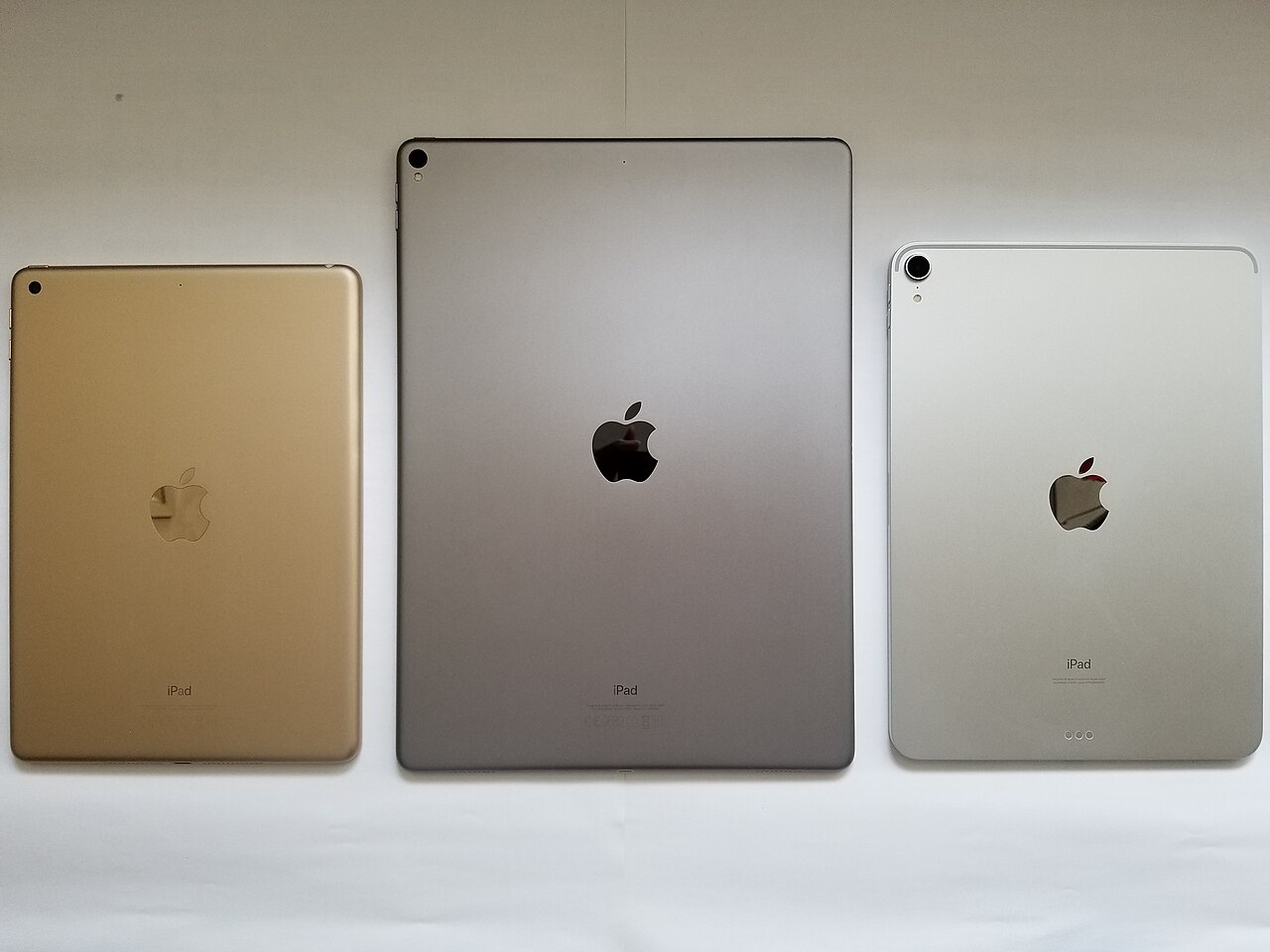
The October 2018 iPad Pro, announced on October 30, 2018 at the Brooklyn Academy of Music in New York, is three things at once: a product, a career moment for John Ternus, and a quiet revolution in Apple’s chip architecture. Most profiles from that era treated only the product. In retrospect, all three matter.
The product
The 2018 iPad Pro brought three simultaneous changes that redefined the category:
- Uniformly thin bezels on all four sides. Goodbye home button, goodbye Touch ID — Face ID came to iPad. The iPad started looking like a science fiction film.
- Flat sides, flat back, square corners. This formal vocabulary resurrected the iPhone 4/5 design language and would become the dominant vocabulary of all Apple hardware over the next five years — iPhone 12 (2020), iPad Air (2020), MacBook Pro 2021, iPhone 14 Pro, iPhone 15.
- USB-C replacing Lightning. The first time Apple abandoned Lightning in any major product since the connector’s introduction in 2012. It signaled where the whole company would eventually go — in 2023 the iPhone 15 also moved to USB-C, six years late.
Thickness dropped to 5.9 mm. Weight dropped. Bezel size dropped. Screen aspect ratios shifted from 4:3 to closer to 4.5:3 in both variants (11-inch and 12.9-inch). For creative professionals — architects, designers, illustrators — the 2018 iPad Pro was a significant upgrade over the 2017 model. For iPad as a category, it was the clearest justification Apple had ever articulated for the “Pro” version.
The chip: A12X
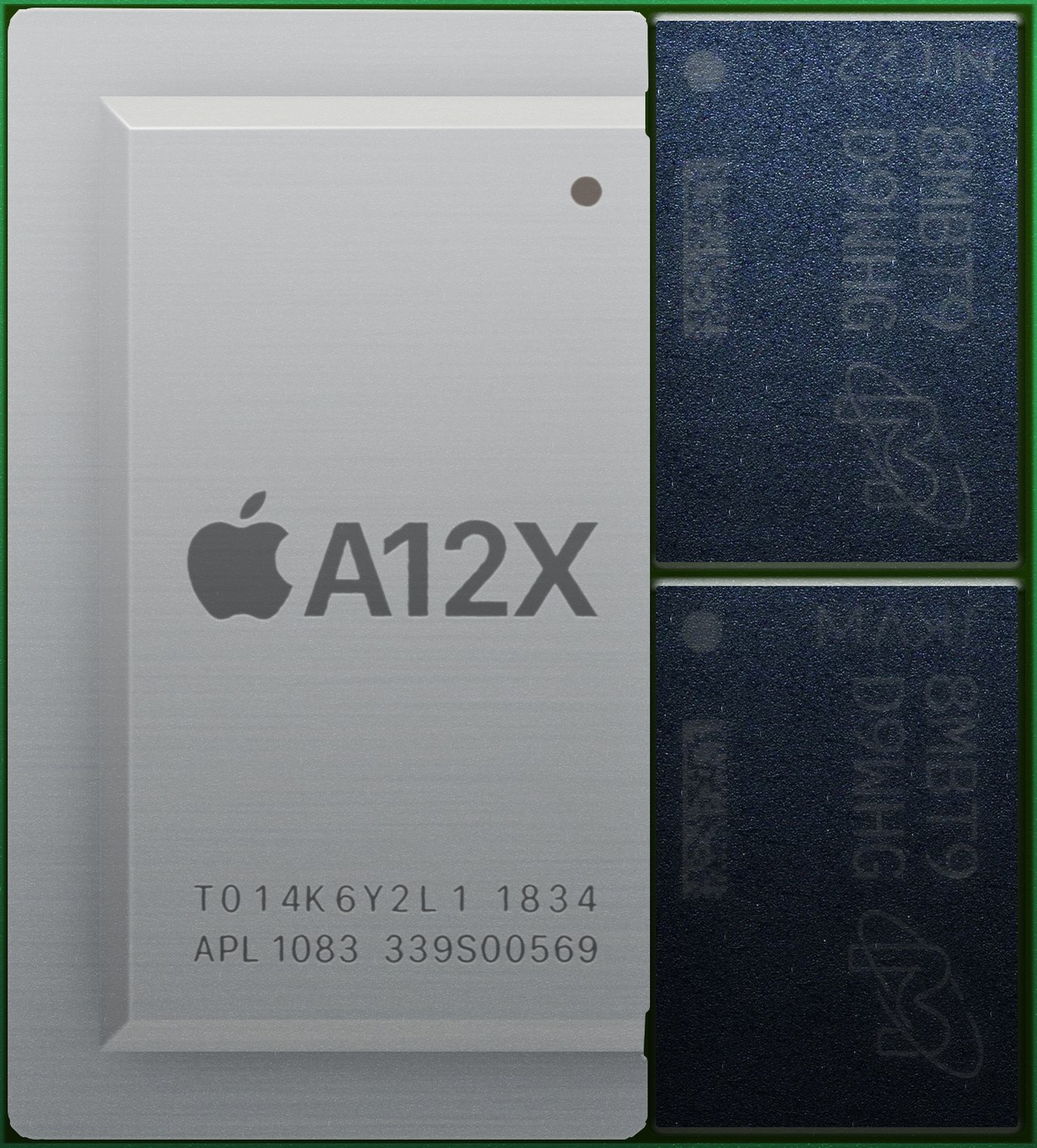
The chip inside the 2018 iPad Pro was the Apple A12X Bionic — a variant of the iPhone XS’s A12 with more CPU cores, more GPU cores, and a significantly larger die area. The A12X was, in retrospect, the architectural prototype for the M1 that would debut in Macs two years later.
Press in October 2018 covered the A12X as “a fast iPad chip.” What was effectively happening: Apple was testing, on the iPad Pro, the thesis that custom desktop-grade ARM architecture could rival x86. A12X benchmarks in 2018 were already reaching mid-tier Intel laptops of that era. The 2020 M1 surpassed Intel without ceremony. Anyone watching the A12X closely in 2018 had already seen the movie.
Ternus introduced the A12X to the public. On stage, in Brooklyn, in October 2018.
The Brooklyn presentation — Ternus’s first time on stage
The choice of Brooklyn Academy of Music was already atypical. Apple traditionally held events at the Steve Jobs Theater (Cupertino) or in San Francisco. Brooklyn was different. It was a product signal: the 2018 iPad Pro was for New York creators and the world, not for conventional Apple fans. The presenters had to match.
John Ternus, then VP of Hardware Engineering, took the stage for the first time in his career to specifically introduce the 2018 iPad Pro. The choice was not an accident. Apple signals things with the stage. When you put your mechanical-engineer-mother on stage to introduce the product, you’re saying: this product was made by this guy. Anyone who worked on the 2018 iPad Pro knew Ternus was the author.
In retrospect, now that Ternus takes over as CEO on September 1, 2026, that Brooklyn moment is the zero point of his public trajectory. Before October 2018, Ternus was the silent engineer. After, he was on stage — and the stages only got bigger until reaching Vision Pro in 2023.
See Ternus’s full biography for the complete career arc, and the timeline for professional milestones with build numbers.
Critical reception and commercial impact
The 2018 iPad Pro was a commercial success — not so much in volume (iPad Pro was never the best-selling iPad), but in price validation. Apple charged between $799 and $1,899, and creative professionals paid. That market size validated the “iPad Pro as laptop alternative” model that became the Pro line’s thesis for the following decade.
Professional creative apps started treating the iPad Pro as a primary platform: Procreate, Affinity Designer, LumaFusion, then Final Cut Pro for iPad in 2023. The positive cycle: capable hardware → professional software → more capable hardware. Ternus had been running that cycle since 2013 under Riccio; in 2018, he was finally taking public credit.
Specifications summary
- Chip: Apple A12X Bionic (7nm, 8 CPU cores, 7 GPU cores).
- Sizes: 11" (1668×2388, 264 ppi) and 12.9" (2048×2732, 264 ppi).
- Connector: USB-C (replacing Lightning).
- Thickness: 5.9 mm.
- Authentication: Face ID (no home button).
- Accessories: 2nd-gen Apple Pencil (magnetic charging), Smart Keyboard Folio.
- Launch: October 30, 2018 (announced), November 7, 2018 (sales begin).
See also
- M-series (Apple Silicon) — the work A12X foreshadowed.
- Apple Vision Pro — the next time Ternus introduced an entire product alone.
- Ternus timeline — the 2018 iPad Pro in chronological context.
- Biography — Ternus from 2001 to the Brooklyn stage.