M-series (Apple Silicon)
Apple's transition from Intel to its own silicon — five M-series generations (M1 → M5) in five years under John Ternus's hardware leadership, three tiers, zero significant public delays. The biggest technical reorganization at Apple since PowerPC → Intel.
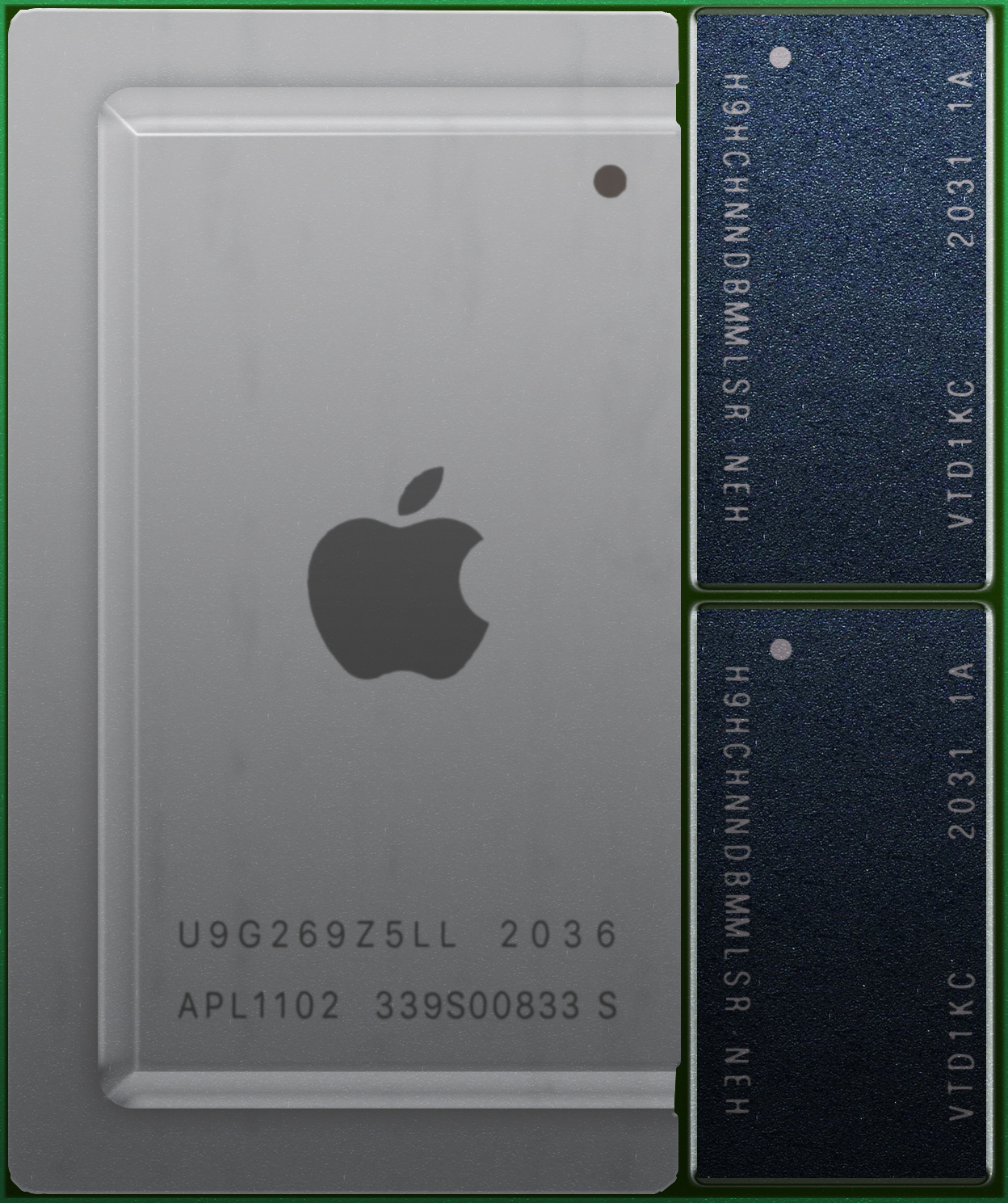
On November 10, 2020, Apple shipped the M1 chip — the company’s first desktop-class processor based on ARM architecture, manufactured by TSMC on a 5 nm process. The M1 debuted across three products: MacBook Air, 13" MacBook Pro, and Mac mini. That moment marked the start of Apple’s most consequential platform transition since the PowerPC → Intel migration in 2006.
Five years later, in 2025, the transition is essentially complete. Five M-series generations (M1, M2, M3, M4, M5) shipped in five years. Three product tiers (base, Pro, Max, Ultra) shipping concurrently. Zero significant public delays. Compared to any equivalent transition — Intel to 14nm, AMD to Zen, NVIDIA to Ada Lovelace — Apple Silicon’s cadence is hard to match in the industry.
The hardware division under John Ternus ran all of this. It’s the most consequential hardware execution project Apple has ever participated in.
Why Apple Silicon mattered
In 2018, Apple still depended on Intel for every Mac. That meant three problems:
- Intel’s cadence. When Intel slipped a node (and Intel slipped 14nm, 10nm, then 7nm), Apple slipped products. Apple did not control its own Mac roadmap.
- Insufficient power efficiency for the form factors Apple wanted to build (laptops getting thinner, with bigger batteries).
- Zero technical differentiation. Any PC manufacturer could buy the same Intel chip. Apple had no architectural advantage on Mac, unlike on iPhone (with custom A-series chips since 2010).
The solution was to make the chip yourself. Apple had been practicing for a decade on iPhone (A-series chips) and iPad (A12X was the prototype). M1 was the crossover of mobile-first ARM with desktop-class ambitions.
The cadence: five generations in five years
| Generation | Release | Node | Milestone |
|---|---|---|---|
| M1 | b.2020.11.10 | 5nm (N5) | MacBook Air, 13" MacBook Pro, Mac mini. First ARM Mac. |
| M1 Pro/Max | b.2021.10.18 | 5nm (N5) | 14"/16" MacBook Pro. “Pro” tier debuts. |
| M1 Ultra | b.2022.03.08 | 5nm (N5) | Mac Studio. “Ultra” tier debuts (two M1 Maxes connected via UltraFusion). |
| M2 | b.2022.06.06 | 5nm (N5P) | MacBook Air, then Mac mini, 13" MacBook Pro, iPad Pro. |
| M2 Pro/Max/Ultra | b.2023.01–06 | 5nm (N5P) | 14"/16" MacBook Pro, Mac mini Pro, Mac Studio. |
| M3 | b.2023.10.30 | 3nm (N3B) | 14"/16" MacBook Pro, iMac. World’s first 3nm consumer chip. |
| M3 Pro/Max | b.2023.10.30 | 3nm (N3B) | MacBook Pro Pro/Max simultaneously. |
| M4 | b.2024.05.07 | 3nm (N3E) | iPad Pro M4. First time M-series debuts in iPad before Mac. |
| M4 Pro/Max | b.2024.10.30 | 3nm (N3E) | 14"/16" MacBook Pro. |
| M5 | b.2025.10 | 3nm (N3P)* | Full family in 2025–26. |
*M5 process details still partially under NDA at this writing.
Apple Silicon as execution
What that table hides is the level of industrial organization required to execute it. Shipping a chip generation per year across three tiers, in cadence synchronized with:
- TSMC’s production calendar,
- Display, RAM, NAND partner production calendars,
- Software calendars (macOS, iOS, iPadOS, watchOS),
- Apple’s marketing calendar,
- Apple’s fiscal calendar (Q4 always being most important),
…requires an extremely well-coordinated hardware division. Ternus’s division did this without a public stumble for five consecutive years. It’s the kind of execution that makes Wall Street stop asking noisy strategy questions and just wait for the next quarter.
What this says about Ternus as CEO
The Apple Silicon transition is, in practice, Ternus’s strongest credential for CEO. Software fails inward — a bug can be patched in a week, an iOS x.0.1 catches most defects. Hardware fails outward — a problem that ships goes to millions of units, and the cost of rework is the company’s quarter.
Running a hardware division at Apple Silicon’s cadence without a public miss for five years demonstrates a specific kind of talent: the ability to make irreversible decisions well. That’s CEO talent. See the full essay at Why Ternus, not Federighi?.
What comes next
Apple Silicon still has frontiers to cross. At least four:
- Modems — Apple developed its own cellular modem, debuting 2025–26. Replacing Qualcomm is one of the largest active multi-year projects.
- Wi-Fi and Bluetooth baseband — another supplier dependency Apple is internalizing.
- GPUs at discrete scale — Apple-Silicon tradition is integrated GPU on the SoC. Frontier: discrete GPUs for workstations and AI servers.
- Neural compute / on-device AI inference — the Apple Neural Engine evolved with each M generation, but the frontier of large-model on-device inference is ongoing.
Those decisions are now Ternus’s. See What does it mean to have a hardware CEO? for the analysis.
See also
- iPad Pro 2018 — the A12X was the architectural prototype for M1.
- Apple Vision Pro — the next new category, powered by M2 + R1.
- Ternus biography — the man who ran all of this.
- Why Ternus, not Federighi? — Apple Silicon as the argument.